Results
Artificial Neural Networks
by Tim Dorney

Results
After the ANN had trained to a final error of 1e-09, the three images which were used as the basis for the training set were scanned. The scanning involved moving the 20x20 input field of the ANN along the rows and columns of the image, one step at a time. A stepping distance of two was used to reduce the scanning time.
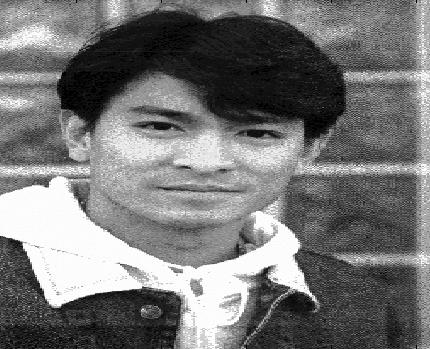
The original image and the ANN output are shown below, side-by-side. The output is further modified by increasing the output value to 3 for the pixels with the maximum values. Note that for all three of the images, the center of the eyes are indentified, along with some extraneous areas which contain sharp contrast features.
For the image below, one maximum point exists for the eye on the left, several for the eye on the right, and several points in the shadow area below the chin.

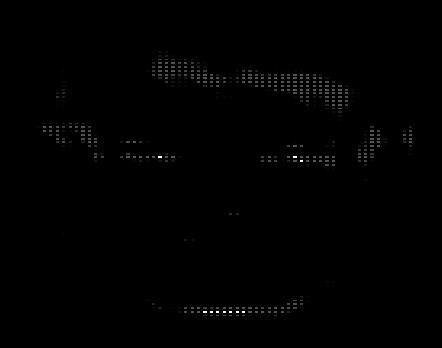
For the image below, maximum points exist for both the left and right eyes, several are located in the high contrast area between the light jacket collar on the right and the dark jacket background, and two points are between the light colored hood on the left and the darker brick background.
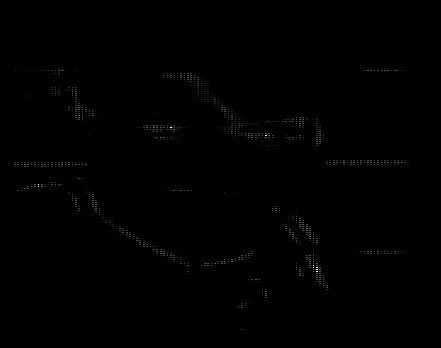
For the image below, maximum points exist for both the left and right eye, and several points on her shoulder.


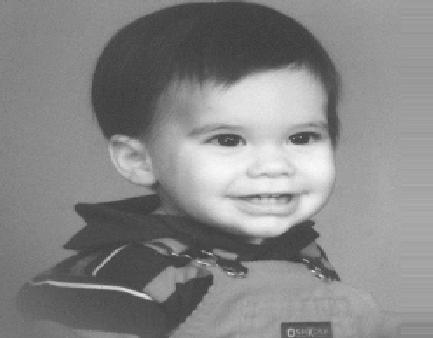
Finally, the same training weights were applied to an image which had NOT previously been "seen" by the ANN. The ANN was able to identify the eyes in this image also, as seen below. The maximum points are located in both the left and right eyes, and a few in the high contrast area between the hair and facial features. Note that the eye on the right has several maximum points, while the eye on the left also has a maximum at its center.
jchen@micro.ti.com
tdorney@ti.com
sparr@owlnet.rice.edu
Last updated on May 3, 1997
Copyright © 1997 All rights reserved.